London Fog and Digital Snowflakes
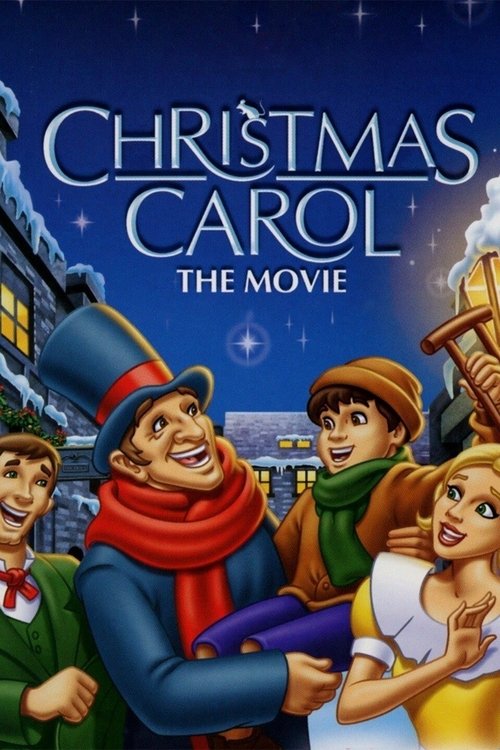
There's a certain chill that hangs in the air around Christmas, a crispness that bites at your cheeks and makes you crave a warm fire and a mug of something spiced. That feeling, that specific atmospheric pressure, is often what we seek when we reach for a Christmas movie. We’re not just looking for Santa hats and twinkling lights; we’re looking for a cinematic echo of the season itself. But what happens when that chill is rendered in pixels, when the London fog is a digital effect, and the snowflakes are meticulously animated?
'Christmas Carol: The Movie' (2001) arrives with a familiar story, dusted with the sheen of early 2000s CGI. It’s Dickens’ classic tale, but filtered through a lens that feels both reverent and slightly…off. The animation style, while competent, lacks a certain warmth. The characters, even in their most vulnerable moments, possess a smoothness that feels at odds with the grit and grime of Victorian London. It’s a curious juxtaposition: a story steeped in tradition, presented in a medium that was, at the time, pushing the boundaries of visual storytelling.
Ghosts of Rendered Past
The film opens with a framing device: Charles Dickens himself, addressing a Boston audience, setting the stage for his timeless tale. This immediately establishes the meta-narrative, a self-awareness that permeates the entire film. It's not just a story; it’s the story, a cultural touchstone, a legend retold. From there, we’re plunged into the familiar world of Ebenezer Scrooge, a miserly old man whose heart is as cold as the December air. Simon Callow voices Scrooge with a suitably gravelly disdain, capturing the character's bitterness and isolation.
Nicolas Cage, as Jacob Marley, is…well, Nicolas Cage. Even in spectral form, he brings a certain manic energy to the role, his chains clanking with theatrical flair. It’s a performance that’s both distracting and strangely compelling, a reminder that even in a faithful adaptation, there’s room for a little bit of Cage-ian madness. Kate Winslet lends her voice to Belle, Scrooge’s lost love, imbuing her with a gentle sadness and a quiet strength.
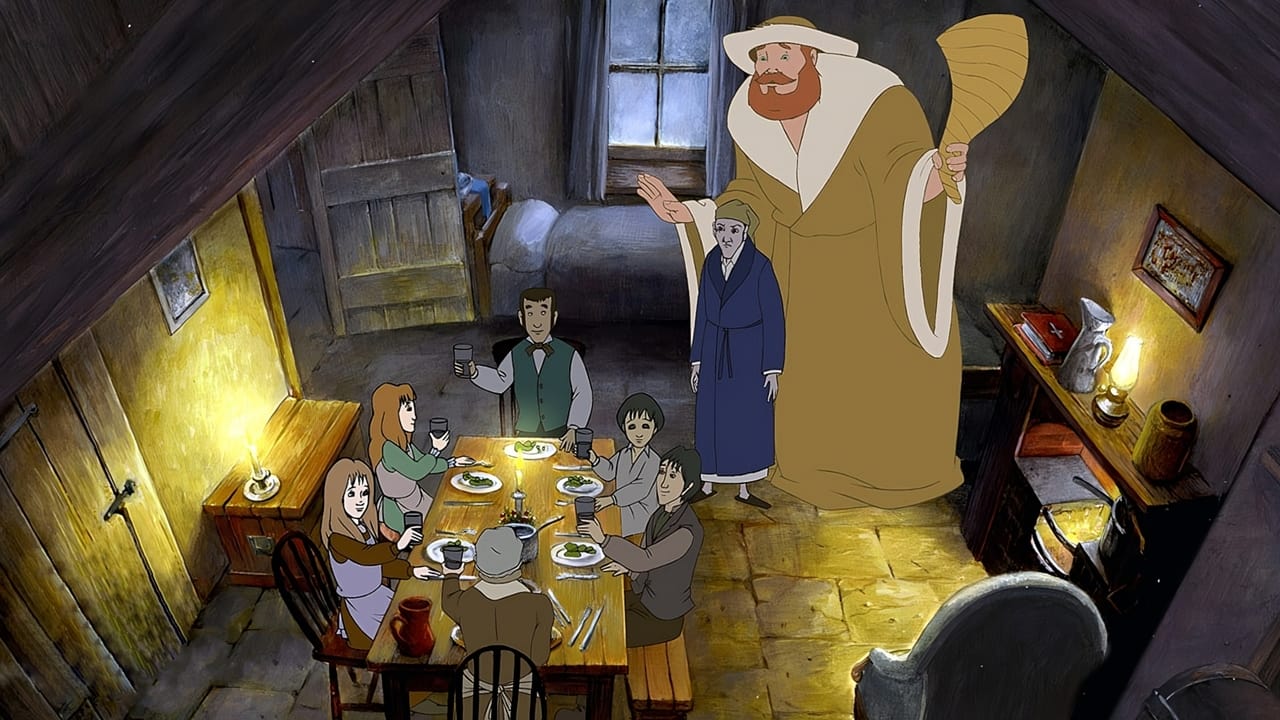
The film’s visual highlights are undoubtedly the ghostly visitations. The Ghost of Christmas Past swirls with ethereal light, guiding Scrooge through his formative years. We see his lonely childhood, his apprenticeship under the jovial Fezziwig, and the heartbreaking moment when he chooses wealth over love. These scenes are rendered with a dreamlike quality, the animation softening the edges of reality, allowing us to slip into Scrooge’s memories. The Ghost of Christmas Present is a boisterous figure, overflowing with festive cheer, while the Ghost of Christmas Yet to Come is a silent, menacing specter, shrouded in shadow, offering a glimpse into a bleak and desolate future.
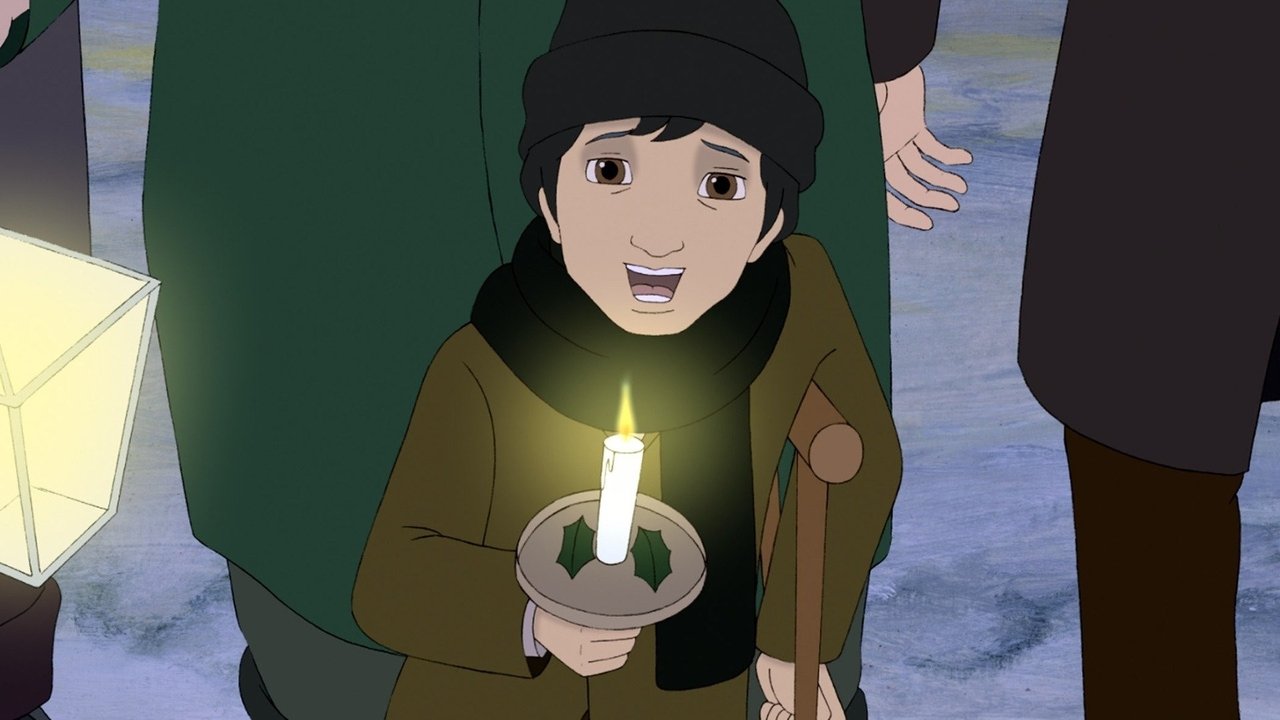
One particular scene stands out: Scrooge’s visit to the Cratchit household. The animation captures the family’s poverty, but also their unwavering love and resilience. Tiny Tim, frail and sickly, is portrayed with a heartbreaking vulnerability. When the Ghost of Christmas Present utters Scrooge’s own callous words about the “surplus population,” the impact is visceral. It’s a moment that forces Scrooge (and the audience) to confront the consequences of his actions.
The Weight of Chains, the Hope of Redemption
At its core, 'Christmas Carol' is a story about redemption. It’s about the possibility of change, even in the face of a lifetime of regret. It’s about recognizing our shared humanity and the importance of compassion. These themes resonate deeply, regardless of the medium in which the story is told. The film explores the isolating nature of greed, the way it can warp our perceptions and blind us to the suffering of others. Scrooge’s transformation is not merely a change of heart; it’s a fundamental shift in his worldview. He moves from a position of self-centeredness to one of empathy and generosity.
The film also touches on the theme of time. The ghosts are not just showing Scrooge his past, present, and future; they are collapsing time, forcing him to confront the totality of his life. He is no longer just an old man; he is a collection of experiences, a product of his choices. This temporal awareness is crucial to his redemption. He realizes that he has the power to change the future, to rewrite his story.
There's a subtle but potent commentary on societal responsibility woven into the narrative. Scrooge's initial justification for his miserly ways – supporting prisons and workhouses – reflects a certain callousness prevalent in Victorian society. The film subtly critiques this attitude, suggesting that true progress lies not in mere containment of the poor, but in actively alleviating their suffering.
Christmas as a Catalyst
Christmas isn’t just a backdrop in this film; it’s the catalyst for Scrooge’s transformation. The holiday season, with its emphasis on generosity, family, and goodwill, serves as a stark contrast to Scrooge’s own miserly existence. The carols, the festive decorations, the sense of community – all of these elements amplify Scrooge’s isolation and highlight the emptiness of his life. The ghosts use Christmas to expose the hollowness of Scrooge's existence, showing him the joy he has missed and the connections he has severed. Christmas is presented as a time of reflection, a moment to take stock of our lives and to consider the impact we have on others. The film leans into the traditional iconography of Christmas – the wreaths, the trees, the feasts – but it also uses these elements to underscore the deeper meaning of the holiday: the importance of kindness, compassion, and connection.
Even the animation style, with its slightly artificial sheen, contributes to this sense of contrast. The bright, cheerful colors of the Christmas scenes stand out against the darker, more somber tones of Scrooge’s past and future, emphasizing the potential for joy and the consequences of choosing a different path.
Undeniably a Christmas Movie
'Christmas Carol: The Movie' is undeniably a Christmas movie. It’s a direct adaptation of a story that has become synonymous with the holiday season. It features all the classic elements: Scrooge, the ghosts, Tiny Tim, the carols, the transformation. But it’s more than just a collection of familiar tropes. It’s a film that grapples with the deeper meaning of Christmas, exploring themes of redemption, compassion, and the importance of human connection. While the animation style may not appeal to everyone, the film’s message remains timeless and resonant. It's a story that reminds us of the power of kindness and the importance of embracing the spirit of Christmas, not just for one day, but throughout the year.
A Promise of a Better Tomorrow
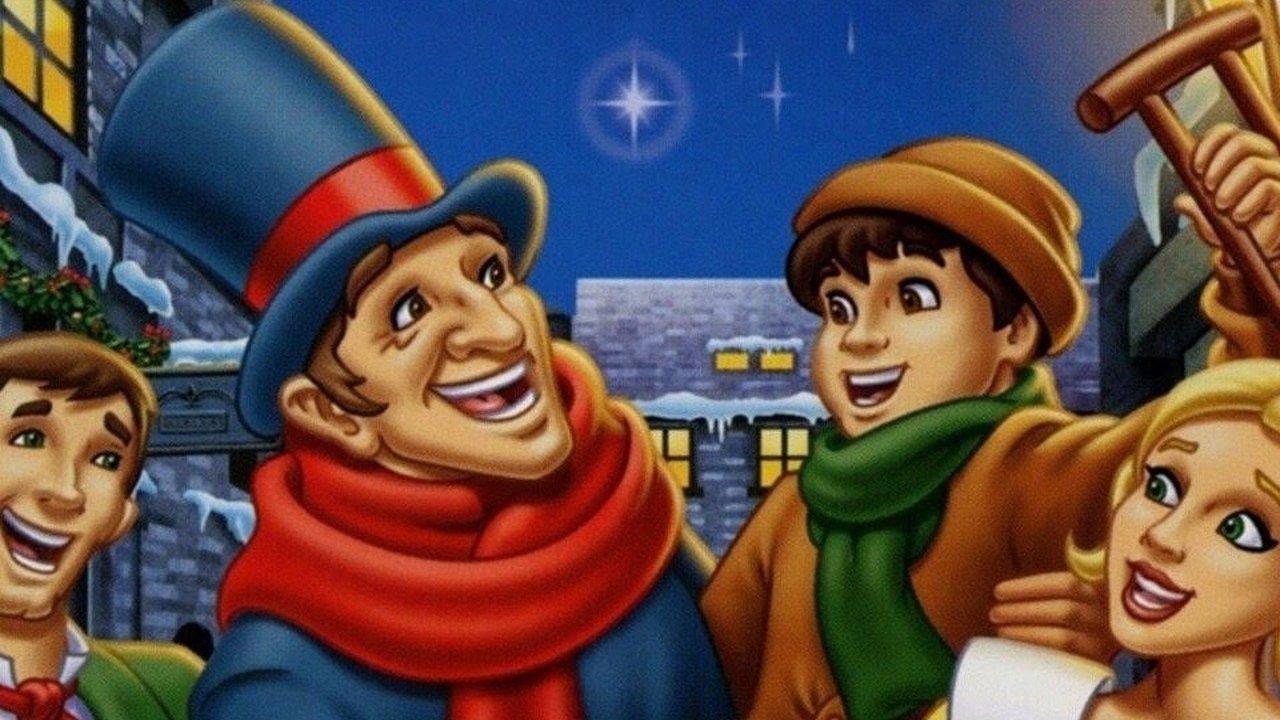
The final scene, with Scrooge embracing Tiny Tim and promising to be a second father to him, is a powerful reminder of the transformative power of the Christmas spirit. It’s a moment of genuine emotion, a testament to the possibility of change, even in the most hardened of hearts. As Scrooge walks through the snowy streets of London, spreading joy and generosity, we are left with a sense of hope, a belief in the power of redemption, and a renewed appreciation for the true meaning of Christmas. And that, after all, is what a Christmas movie is all about.